Multi-Verse Optimizer
Multi-Verse Optimizer (MVO)
- Year introduced
- 2015
- Original authors
- Seyedali Mirjalili; Seyed Mohammad Mirjalili; Abdolreza Hatamlou
- Source of inspiration
- Multiverse theory (white, black and wormholes)
- Search space
- Continuous
- Optimization types
- Hyperparameter Optimization, Multi-objective Optimization
- Applied research in the repository
- 0
Overview
Inspired by concepts of the multiverse theory in cosmology: white holes, black holes and wormholes. Each solution is a "universe" and its fitness an "inflation rate"; objects move from universes with high inflation to universes with low inflation through tunnels, and wormholes carry objects towards the best universe.
Source of inspiration and mechanism
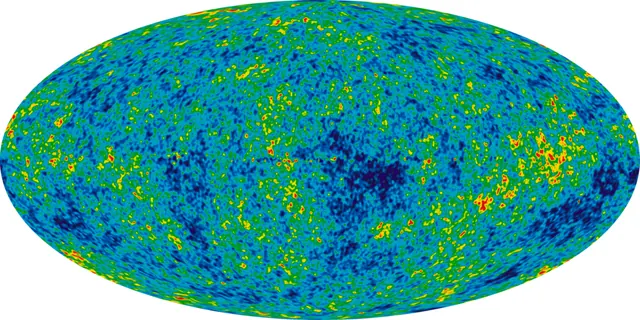
The multiverse hypothesis assumes there are many universes that may interact through white holes, black holes and wormholes. These are theoretical concepts in cosmology, not experimental facts, and they are used here as a metaphor.
Initialization
Random.
Update mechanism
Dimension exchange, then wormhole travel.
Exploration
Exchanging objects between universes through white and black holes.
Exploitation
Wormholes around the best universe as WEP increases and TDR decreases.
Mathematical description
For each dimension a donor universe is chosen by roulette wheel according to the normalized inflation rate (white/black hole exchange). Then, with probability WEP, the dimension is moved through a wormhole around the best universe with a step TDR·((ub − lb)r + lb). WEP increases linearly from 0.2 to 1, and TDR decreases.
Wormhole existence probability
WEP = min + l\left(\frac{max - min}{L}\right)min = 0.2, max = 1.
Travelling distance rate
TDR = 1 - \frac{l^{1/p}}{L^{1/p}},\quad p = 6Wormhole
x_i^j = \begin{cases}X_j + TDR\left((ub_j - lb_j)r_4 + lb_j\right) & r_3 < 0.5,\ r_2 < WEP\\ X_j - TDR\left((ub_j - lb_j)r_4 + lb_j\right) & r_3 \ge 0.5,\ r_2 < WEP\\ x_i^j & r_2 \ge WEP\end{cases}X_j is dimension j in the best universe.
Computational complexity: O(T\cdot N\cdot (D + C_f))
Pseudocode
Initialize universes
for l = 1..L:
WEP = min + l*(max - min)/L; TDR = 1 - l^(1/p)/L^(1/p)
for each universe i, dimension j:
if r1 < NI(U_i): x_ij = x_kj (k by roulette)
if r2 < WEP: x_ij = best_j +/- TDR*((ub - lb)*r4 + lb)
return bestPython implementation
There is currently no tested python implementation of this algorithm in the lab. We did not include untested code so that it is not used as a reference implementation.
Coefficients
| Parameter | Symbol | Typical value | Range | Description |
|---|---|---|---|---|
| WEP min | WEP_{min} | 0.2 | ||
| WEP max | WEP_{max} | 1 | ||
| p | p | 6 | Exploitation precision |
Advantages
- A dimension-exchange mechanism that preserves diversity
- A multi-objective version (MOMVO).
Limitations
The wormhole step depends on the absolute bounds, not on the distance between solutions.
Use in artificial intelligence
Domains documented in the card: Machine learning, deep learning, hyperparameter tuning
Continuous and engineering optimization, tuning SVM and network parameters.
Hybridization potential
These are partnerships suggested theoretically in the card; any resulting design is presented as a "proposed hybrid method" until its results are compared with the literature.
Applied research from the repository
An aspect that did not appear in the current search results within the repository. This does not mean there is no published research outside it.
Original reference
Seyedali Mirjalili; Seyed Mohammad Mirjalili; Abdolreza Hatamlou (2015). Multi-Verse Optimizer: a nature-inspired algorithm for global optimization. Neural Computing and Applications, Springer Science and Business Media LLC.
Verified DOI: 10.1007/s00521-015-1870-7
The bibliographic data match the Crossref record (checked 2026-11-20). There is no tested Python code for this algorithm in this version.
